Pet portrait photo guide
How to choose the best photo for a custom pet portrait
A beautiful portrait starts with a photograph that reveals the face you know: the eyes, markings, expression, and small details that make your pet unmistakably themselves.
Start a portrait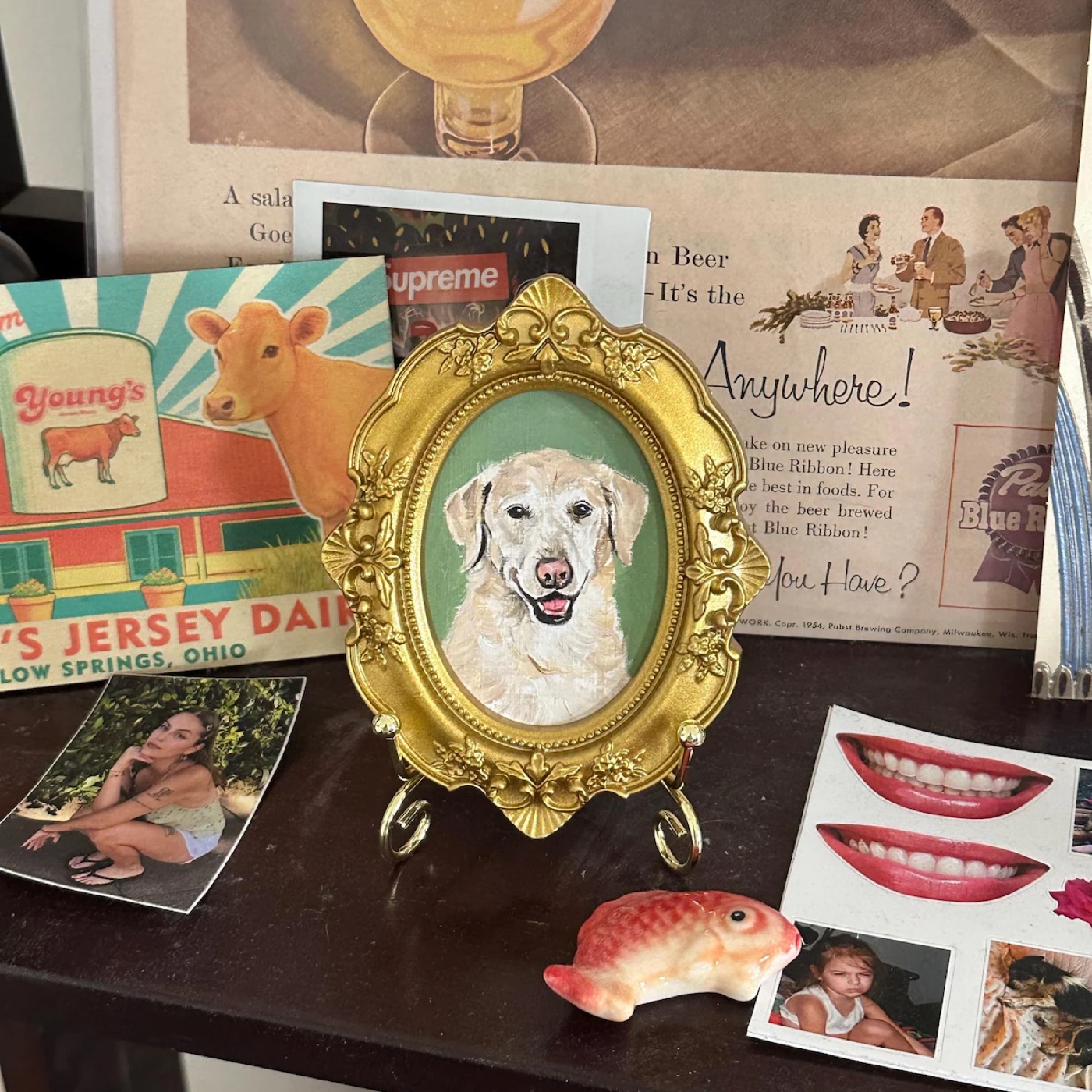
The quick check
Five signs you have a strong reference photo
You do not need a perfect photograph. If most of these points are true, the artist will usually have what they need.
- The eyes are sharp and easy to see
- The full head and both ears are visible
- Natural daylight shows the coat colour accurately
- The camera is close to the pet's eye level
- The expression feels familiar and true to them
Use soft natural light
Photograph near a bright window or outdoors in open shade. Avoid strong flash, deep shadows, and coloured indoor lighting that changes the coat colour.
Meet them at eye level
A photo taken close to eye level preserves the natural proportions of the face. A steep view from above can make the nose and body look unusually small.
Choose character over posing
The most useful image is often the one with a familiar head tilt, relaxed mouth, or direct gaze, even when the background is ordinary.
When the photos are limited
Older and imperfect photos can still tell the story
If a pet has passed away, do not discard a meaningful image just because it is cropped, dim, or slightly soft. Send the photograph that best captures their expression, then add supporting images that show the missing details.
Tell us which photo feels most like them. A note about eye colour, a white patch hidden in shadow, or the way one ear folded can be as useful as another photograph. We may carefully restore limited detail before painting and will contact you if the references are not sufficient.
Explore pet memorial keepsakes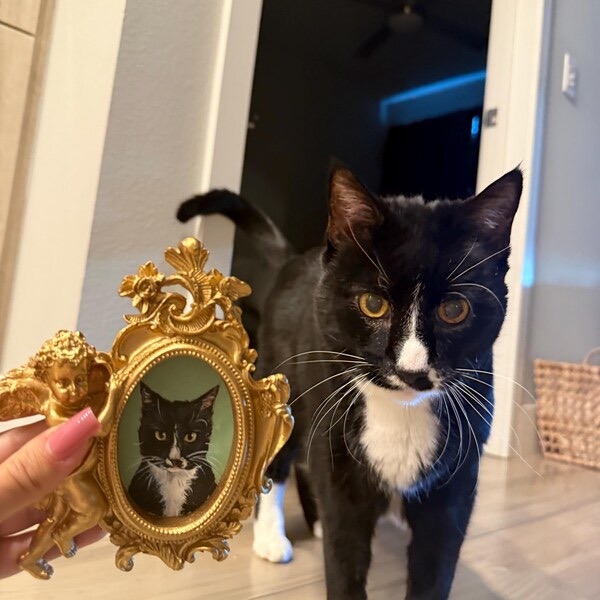
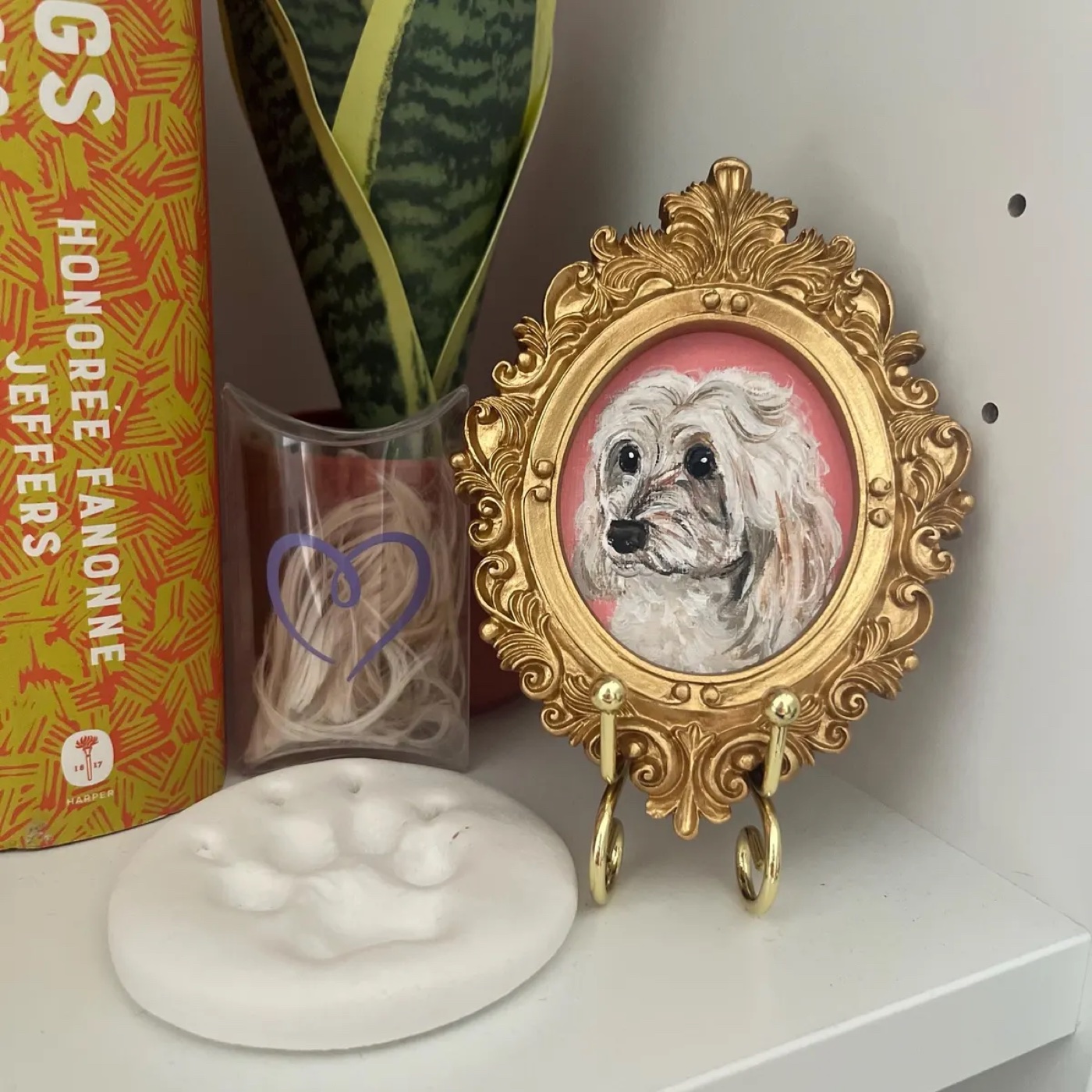
More than one subject
Combining pets or people from separate photographs
Match the viewing angle
Similar eye-level angles make separate subjects sit naturally together. If one pet faces left and another faces right, mention whether you want them turned toward each other in the final work.
Explain relative size
Tell the artist when one pet was much larger or smaller than the other. A quick note about their real-life size prevents the camera distance in separate photos from creating the wrong proportions.
Before you upload
Custom pet portrait photo FAQ
Does the photo need to be professionally taken?
No. A clear phone photo in natural light is often excellent. The artist needs to see the eyes, markings, ear shape, and true coat colour more than a formal pose.
Can you create a portrait if my pet has passed away?
Yes. Send every useful photograph you have, even if none is perfect. One image may show the expression while another helps with colouring, markings, or the shape of the ears.
Can two pets from separate photos appear in one portrait?
Yes. Separate photographs can be combined. Similar camera angles and lighting make the final composition feel more natural, but the pets do not need to have been photographed together.
Can a blurry or damaged photo be restored first?
Sometimes. Limited detail can often be improved before painting, especially when several references are available. We will contact you if an important feature cannot be reconstructed responsibly.
How many photos should I upload?
Upload the clearest main photo and add one or two supporting images when they reveal useful details. More photos are helpful only when they show the pet clearly and consistently.
Found the photo that feels like them?
Upload it with your order and review the finished portrait by email.